
Mommy Makeover
Conveniently located to serve the areas of Beverly Hills, CA

A mommy makeover is a procedure that addresses the changes in the breasts and abdomen that are unresponsive to continued exercise and weight loss. With pregnancy, the body changes to prepare for the coming miracle of childbirth. The abdomen stretches to accommodate the growing child and the breasts enlarge in preparation to nourish the growing infant. This is great for the child, but can leave the mother with residual stigmata of childbirth.
Contents
Before and After Photos


About
During pregnancy, the abdominal wall stretches all it’s components to accommodate the growing baby. This includes the connective tissue between the muscles, that occasionally does not return to it’s pre-pregnancy state. The muscles can be brought together, resulting in abdominal wall tightening and flattening. The skin may be permanently stretched out, so this excess skin can be removed. The breasts enlarge with pregnancy and can remain so during breast feeding. The breast response in the postpartum period is variable. Some mothers note that their breasts remain larger than prepregnancy. These women might be interested in a breast reduction or a lift. Some mothers experience deflation and might prefer a lift alone, while others may also want to add some volume for either restoration or enhancement compared to her prepregnancy state. If you have these changes after pregnancy, then the mommy-makeover might be right for you. It is a combination of abdominal and breast procedures designed to minimize the stigmata of pregnancy.
Abdomen

The stretching out of the connective tissue, or fascia, between the muscles, or rectus abdominis muscles, is referred to as a diastasis of the muscles, or diastasis recti. This diastasis is a stretching out of the fascia in contrast to a hernia that has a hole in the fascia. This diastasis recti is treated by pulling the connective tissue together, moving the rectus muscles back toward the midline and restoring their original orientation straight up-and-down in contrast to the stretched and bowed out parentheses configuration.
The excess skin is removed from the lower abdomen. Depending on the degree of excess, the removed skin may include tissue only below the umbilicus or belly button (mini-tummy tuck) or may even involve removal of skin above the umbilicus (full-tummy tuck). In either case, more is removed in the middle with less and less removed towards the sides. The upper skin is released and pulled down to meet the lower incision so the ultimate scar can reside on the lower abdomen, extending to the flank when there is more excess tissue. If a full abdominoplasty or tummy tuck is performed, with the upper incision being above the umbilicus, when the skin is pulled down, it covers the umbilical stalk. To prevent it from being buried, an incision needs to be made in the skin to allow for it to be inset into the newly redraped skin. Thus, there will also be a scar around the belly button.
Breasts
These can be treated with a lift, reduction, and/or augmentation. It all depends on the shape, volume, degree of skin laxity, and patient desires.
Breast Reduction (Reduction Mammoplasty)

After pregnancy and the completion of breast feeding, if you are no longer lactating and think your breasts are too large, a breast reduction can be performed. (See Breast Reduction section)
Breast Lift (Mastopexy)

After pregnancy and the completion of breast feeding, if you are no longer lactating and think your breasts are droopy with notable skin excess, a breast lift can be performed. (See Breast Lift section)
Breast Augmentation

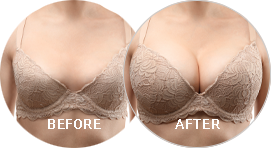
After pregnancy and the completion of breast feeding, if you are no longer lactating and think your breasts are too small, a breast augmentation can be performed. (See Breast Augmentation section). This can be combined with a lift (Mastopexy-Augmentation), if there is notable skin excess that will not be taken up by the volume expansion associated with an implant or available tissue excess.
Benefits
Abdomen
The best results are obtained when you are happy with your weight. Have you lost all your pregnancy weight? Have you tried exercise and the muscles are still lax? If you are at your pre-pregnancy weight and exercise is not tightening or flattening your abdomen as you hoped, you may be a good candidate for an abdominoplasty.
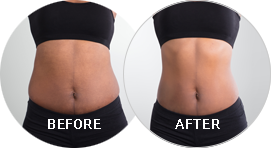
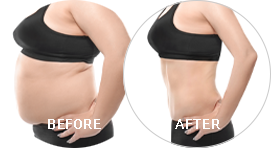
This procedure will remove any excess skin laxity as well as tighten the muscles underneath, leading to a flatter abdomen with skin tightening.
It will also remove any stretch marks in the area of skin that is removed. There are no topical creams that will remove these stretch marks and exercise will not tighten up this stretched out skin. Exercise can certainly tone the muscles, but it will not eliminate the diastasis between them. These are only addressed with surgery.
Breasts
The best results are obtained when you are happy with your weight. Have you lost all your pregnancy weight? If you have not, and you proceed with surgery, the results of your surgery will be altered by the additional weight loss after surgery. What was tight will loosen faster. Everything stretches out or relaxes over time. This process is accelerated with additional weight loss after surgery. What was lifted will droop over time as gravity always wins. Additional weight loss after surgery will speed this natural process.

While exercise is good for muscle tone and overall conditioning, it will not tight the skin of the breasts. In fact, if you are aggressively exercising and losing weight, this will impact the appearance of your breasts. The breast is made of several components: the skin, the breast tissue and subcutaneous fat. Exercise affects the fat component, with it decreasing in amount with exercise and weight loss. This fat not only gives volume to the breast, it also provides structural support. If you lose weight in your breasts, both volume and support decrease. If your skin cannot shrink along with the amount of volume lost, then there will also be excess skin. Thus, it is best to have a stable weight before proceeding with breast surgery to provide you with the longest lasting results.
Is There a Specific Age that Benefits Most from a Mommy Makeover?
While any age patient can benefit from a mommy makeover with contouring surgery of the abdomen and breasts, the best results are seen in patients with the best quality skin and muscle tone. If there are stretch marks that will be left after either the breast or abdominal surgeries, this tissue will relax or age faster. Thus, the better the quality of the remaining skin envelope of the abdomen and breasts, the better the long-term quality of the result.
What About Pregnancy?
The mommy makeover is best performed after a patient is done with having children. Additional pregnancies after a mommy makeover will certainly affect the appearance of the operated abdomen and breasts. Pregnancy will again lead to changes in the breasts and abdomen, with stretching of the skin and soft tissues. Will they return to their prepregnancy state after returning to prepregnancy weight? It is unpredictable. Some may notice little or no change, however others may note dramatic changes. If the patient is again left with laxity in both the abdomen and breasts with additional volume changes in the breasts, then these changes might reach the level of desiring additional surgery. Thus, to spare the additional time and expense of a second surgery, it is best to wait until one is done with having children.
Qualified Candidates
The best patients for this procedure are healthy women who are done with having children and are at their goal weight. Both additional pregnancy and changes in weight after a mommy makeover will affect the quality and the longevity of the operative results. While patients of all ages can benefit from mommy makeovers, those with the healthiest quality skin and soft tissues will have the best results. Finally, patients cannot smoke as this decreases the needed blood supply to tissues for normal, uncomplicated wound healing.
Personal Consultation
Dr. Smith is a renowned body contouring specialist who has lectured locally, regionally, nationally, and internationally on breast and abdominal contouring surgery. He has over 18 years of clinical experience and has trained many plastic surgeons in the Greater Beverly Hills Area, surrounding region, and across the country in procedures such as the mommy makeover.
If interested in a personal consultation for a mommy makeover by Dr. Smith, please contact the office.
If you are interested in a mommy makeover with Dr. Smith, he will be pleased to meet with you to discuss your pregnancy and weight history as well as seek to understand your goals and desires. He will want to know about your personal and family history of breast disease as well as any surgeries you have had on your breasts and abdomen. He will conduct a physical exam, focusing in on both your abdomen and breasts, but will also look at your backside as well as this may impact your results and influence your options. He will then discuss your various options and recommend a treatment tailored to you and your goals and desires.
Preparation for Mommy Makeover
- Be happy and stable at your weight.
- Be sure you are not planning on having additional pregnancies.
- Be on a healthy diet, emphasizing protein intake.
- Do not smoke.
Doing all these will give you the best chance to have a great, uncomplicated surgical experience with the longest lasting best result possible for you.
What Happens During a Mommy Makeover?
Abdominoplasty
This procedure is done under general anesthesia. Before going to sleep, leg squeezers or sequential compression devices (SCDs)are placed on the calves to help decrease the chance of a blood clot or deep venous thrombosis (DVT). Patients will also get a dose of antibiotics given in their IV to decrease the chance of a postoperative infection.
Incisions are made across the lower abdomen and the skin and fat are removed from the lower abdomen, sparing the umbilical stalk.
The upper abdominal skin is then elevated to the level of the lower portion of the sternum or breast bone. The muscles are now clearly visible and the diastasis or separation between the rectus muscles is repaired by plicating or pulling in the muscles toward the midline. This tightens and flattens the abdominal wall. A pain catheter is placed to deliver local anesthetic across the plicated muscles and drains are placed to evacuate tissue fluid (serum) from the raw tissue surfaces. The skin is then pulled down and closed to the lower incision and the umbilical stalk is matured through this redraped skin. This results in scars that run across the lower abdomen from hip to hip and a scar around the umbilicus or naval.
Breast Surgery
Depending on what is needed to achieve the patient’s goals, a reduction, lift and/or augmentation can be performed. Please see the appropriate sections for Breast Reduction (Reduction Mammoplasty), Breast Lift (Mastopexy), Breast Augmentation (Augmentation Mammoplasty).
Rapid Recovery

Once awoken from surgery, your will go to the Recovery Room for observation. Once you have met all milestones to leave, you may go home or to the floor for a 23-hour observation period. If you go home, Dr. Smith likes to see you the next day to make sure all is well.
Pain Management
Narcotics: You will be prescribed oral narcotics for moderate to severe postoperative pain. You are also encouraged to take non-narcotic medications to help decrease the amount of narcotic consumed. Narcotics have more undesirable side effects that can be avoided with the use of non-narcotic pain medications.
Pain Pump: The pain pump will deliver a continuous flow of local anesthetic through a catheter placed through your abdominal wall at a prescribed rate determined by Dr. Smith. This is designed to take the edge off of your early post-surgical pain and decrease your need for narcotic pain medications. It will be removed at the 1-week postoperative visit when the bulb is empty. The tape is removed, sutures are cut and the catheter is pulled out. This is wiped down and then covered with a small dressing.
Nausea Prevention
Medicine for nausea will be provided. Take if you need it. The pain pump will hopefully decrease the amount of narcotic you need, and thus decreasing any nausea associated with your narcotic pain medication. Take your medicines with a little food. This will also help decrease nausea associated with your medications.
Itching and Sleep
Some patients may experience itching associated with taking narcotics. If this is the case, Benadryl has been prescribed for you to help with this. If severe itching is noted, please contact Dr. Smith to evaluate you for a possible allergic reaction. Some patients will benefit from a gentle sleep aid in the early postoperative period. Benadryl can also be helpful to you in this regard.
DVT Prevention
While in bed, the SCDs should be worn. You are encouraged to be out of bed and walking at least once an hour. Both the SCDs and this ambulation will help decrease the chance of a blood clot or DVT. This can be a life-threatening complication. In some patients with enough risk factors for blood clots, some patients may get a blood thinner to minimize the chance of such a clot. This needs to be balanced with the risk of increased bleeding.
Antibiotics
If an implant was used, then you will have antibiotics to be taken for at least one week. If no implants are used, you will not receive any additional antibiotics unless there is evidence of a postoperative infection.
Nutrition

You are encouraged to advance to a normal diet, eating a good well-balanced diet, emphasizing your protein intake. Your nutritional requirements go up with the stress of surgery and you need the appropriate nutritional building blocks to heal. You are encouraged to consume 1.5 – 2.0 grams of protein for each kilo they weigh. For instance, if you weigh 60 kgs, then you should eat 90 – 120 g of protein each day. When patients are not appropriately healing their wounds, it is commonly traced to inadequate nutrition, specifically protein.
Drain Care
You need to record your 24-hour drain output for each individual drain. The bulbs must be collapsed at all times to create the suction necessary to facilitate good flow of fluid out into the bulbs. To more easily calculate 24-hour drain outputs, it is best to empty the drains at least once at the same time everyday. The drain may be emptied more frequently to ensure the bulb is always collapse create sufficient suction. Once the drain output has slowed to less than 30 cc in a 24-hour period, the drain is removed. Drain sites typically take a day or two to seal up. Once both drains are removed and both drain sites have sealed, the patient may shower.
Showers
While you have drains in your abdomen, Dr. Smith prefers you sponge bathe. Once the drains are out and the sites have sealed, then you are allowed to shower, but no soaking in the tub for 4-6 weeks, assuming normal healing.
Compressive Garments
Breasts: Your surgical dressing may be removed postoperative day 1 and replaced with a lightly compressive sports bra that fastens in the front. Most patients find the front-fastening garments more easy to get in and out of. There should be no underwire as this may put pressure on an incision in the lower portion of the breast. The garment should provide light compression across the entire breast, helping to decrease tissue swelling or edema. This swelling can lead to more discomfort and also put stress on the freshly closed incisions.
Abdomen: Once the final drain is removed, most patients will benefit from wearing a lightly compressive garment. This helps stabilize the tissues and decreases the chance of fluid accumulation in between the tissue layers.
Incision Management
The incisions are closed in multiple layers of dissolvable sutures and/or staples. The incisions are sealed with a skin tape and glue combination. This typically stays in place for a month. When showering, these should be patted dry. If the tape begins to lift, the lifted areas may be trimmed leaving the adherent tape in place. If there is moisture that is accumulating underneath the tape, this portion of tape should be removed to prevent maceration or incision break down due to moisture. Any tape and glue that is still in place at the one-month postoperative visit will be removed by Dr. Smith.
Lifting
You should not lift anything greater than 10 pounds for 4-6 weeks assuming normal healing. After all is sufficiently healed, Dr. Smith will allow you to gradually increase your activities to normal.